"105"a http-equiv="content-type" content="text/html;charset=utf-8"> INVISIBLE TEMPLE: news and research on temples, sacred sites, sacred places and ancient knowledge by Freddy Silva
Welcome to the website of best-selling author Freddy Silva.

NEWS April 2012

How is it that ancient civilizations were able to maintain their cultures in perfect equilibrium for thousands of years yet ours become dysfunctional within a few decades?

The answer is to look at the legacy of ancient temples, oracles and sacred sites our ancestors left behind.

What can we learn from sacred sites? What they do for us and to us? Beyond the obvious physical temple we enter a world of metaphor, subtle forces and shamanic states of awareness. That’s where the truenature of the true temple exists, the invisible temple.

For decades I've walked countless sacred places around the world, taking in both their spatial and special qualities. After a while it became apparent that sacred sites speak. A mythical, invisible spirit of place is aware of your presence and purpose. It scans your human energy field. Should your PIN match, you engage in an intimate conversation. And your relationship with the temple begins. Eventually you will realize there is a library of knowledge being shared. Its contents are boundless and timeless, the sum of all there is: Universal codes of energy, ancient systems of knowledge, measure and proportion, and how these are applied at any given moment in our life to enhance both your potential and the quality of life around you.

The elements that make the Universe tick —magnetism, water, sacred geometry, sacred measure, sound— converge at sacred sites. By carefully blending these principles together, it is possible to open a portal of possibility to other levels of reality. It is even possible to apply the same principles at home.

Depending on what you are seeking,the experience will alter your consciousness. Which is precisely the ultimate purpose of such places of power.

And that is precisely what our ancestors were up to when they created a grid of tens of thousands of temples all over the world. As you walk through this site I hope you become more aware of the qualities that define sacred space, and that you use this information to benefit all living things on Earth. Including yourself.

Read...
Read...
Watch...
Watch...
Essays on sacred sites, 2012 and the Mayan calendar, the legacy of Egyptian temples, our love affair with the paranormal, the origin of crop circles, and the secret coding of esoteric information where you least expect it. Read more...
Watch...
The alignment of sacred sites is a careful and ancient art. Evidence shows that that temples are connected both by ley lines (geometric alignments) and telluric currents (the Earth's magnetic lines of energy). Read more...
There is measure and then there is sacred measure. The builders of sacred sites observed natural laws and created a numerical system that opens a correspondence with the cosmos. And people entering temples come under its influence. Read more...
Watch...
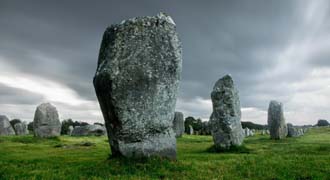
Ever wondered why the stone in sacred sites is not of local origin? Or why you can get an electric shock from menhirs and other megaliths? There's a science behind it. Read more...
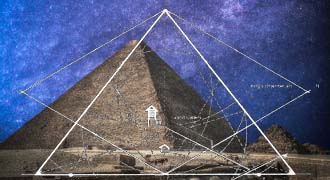
Sacred geometry was used to define the specific energetic environment created inside each temple. That's why every Egyptian pyramid 'feels' different. And that geometry also has a resonant affect on your DNA. Read more...
Watch...
Water is a most abundant element on the planet and in the human body. Not surprisingly it is also the foundation of every temple. Is it possible that water in sacred sites and holy wells really is wholy water? Read more...
Curious as to what kind of subtle energy exists in temples? And what effect it has on your state of consciousness? If you're seeing things in sacred sites it's not just your imagination. Read more...
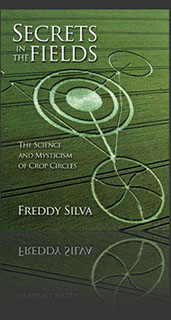
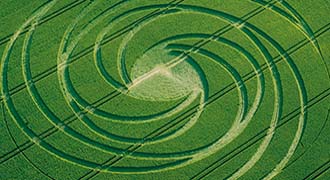
Crop circles are perhaps the most misunderstood phenomenon today. And given the distorted media bias, it's no wonder. Based on research from my first book Secrets In The Fields, the evidence points away from humans. Read more...

SPECIAL OFFERS

FINE ART
PRINTS

RESONANCE
CARDS

LECTURES

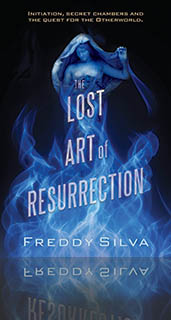
BOOKS

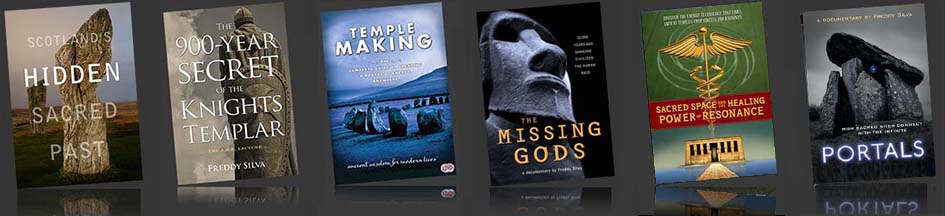
DVDs

NEWS FROM THE MODERN AND THE MEGALITHIC.

Australia to give $1 million to Angkor temples
(abc.net.au) The Federal Government says it will contribute $1 million towards a scheme to protect Cambodia's Angkor Wat temples. The world-famous temple complex in Siem Reap province is visited by thousands of tourists each day.
Foreign Minister Bob Carr is in Cambodia on his first trip overseas since being sworn into his new role and says the funding will help preserve the 700-year-old monuments in the area. "We're going to take the experience Australians gain managing Uluru and other world heritage sites, and see that in this great site," Mr Carr said. "[It's] important to the whole world that there is a proper management of the tourist pressures, that the area's not going to be trampled to death, and that there's going to be protection from the damage that could be done by floods."
Senator Carr says the scheme will also ensure money from Angkor tourism reaches the hands of poor locals. Senator Carr has also visited the Fred Hollows Foundation facility in Cambodia, which gets $6 million from AusAID to train local doctors and nurses to remove cataracts. He will also visit Vietnam and Singapore on the trip.


The music of the Islands: 2300 year old lyre comes to life
(Past Horizons) Archaeologists and music experts believe they have found the remains of the earliest stringed instrument ever found in Western Europe – dating to more than 2,300 years ago – at the excavation of Uamh An Ard Achadh (High Pasture Cave) on the Island of Skye.
The artefact had been broken and burnt, but the notches where strings would have been placed are easy to distinguish.
Music archaeologists Dr Graeme Lawson and Dr John Purser studied the fragment which was recovered from the rake-out deposits of a large slab-built hearth outside the cave entrance.
Dr Lawson, of Cambridge Music-archaeological Research, said: “For Scotland – and indeed all of us in these islands – this is very much a step change. It pushes the history of complex music back more than a thousand years, into our pre-history. And not only the history of music but more specifically of song and poetry, because that’s what such instruments were very often used for.”
The earliest known lyres date from about 5,000 years ago, in what is now Iraq: and these were already complicated and finely-made structures. But in Europe even Roman traces proved hard to locate, with many references and images but no actual remains.
The location of the find is exciting in itself, as here is an object which places the Hebrides, and by association the neighbouring mainlands, in a musical relationship not only with the rest of the Barbarian world but also with famous civilisations. It now becomes a world that was held together not just by technology and trade but also by something as ephemeral and wonderful as music and poetry and song. High Pasture Cave on the island of Skye is one of an entirely new category of archaeological site – shedding light on the life, death and thinking of Iron Age people. It’s marked by fire and feasting. In mid-winter, sacrifices of as many as 50 piglets could be made, their bones deposited in the cave, along with many other gifts for the gods.  But there was also death here, in this cave with its underground stream. The bones of a woman, a very young baby and a foetus were offered up, covered by stones on a ritual stairway to the depths. The foetal bones had been mixed with the bones of a fetal pig. Isotope analysis even showed that the woman and the babies were related.
Archaeologist Steven Birch who co-directs the site commented that, “Access to the natural cave at High Pastures was of prime importance to the people using the site and throughout its use the entrance was modified on several occasions which included the construction of a stone-built stairwell. Descending the steep and narrow steps, the transition from light to dark transports you out of one world into a completely different realm, where the human senses are accentuated. Within the cave, sound forms a major component of this transformation, the noise of the underground stream in particular producing a calming environment.”
“The discovery of the wooden bridge from the musical instrument”, he added “represents a fitting end to the excavations at the site and conjures up a vivid image of the past, showing people gathering together for religious ceremonies, feasting on pig and cattle and drinking to the accompaniment of music.”
In 2006, 80 fragments of bone and antler were uncovered, the majority typical of Iron Age domestic assemblages, such as points, pins, needles, handles and fittings. But there was also a number of unusual finds consisting of a cache of seven bone/antler points, their tips showing polish and fine circumferential wear. The wear pattern was unusual and the only comparanda were for tuning pegs for lyres, the wear arising from the movement of the strings. These are a highly unusual find, but there is a similar example from Cnip, Lewis (Hunter 2006, 147-8, fig 3.24a). The deposits from which the bridge was recovered date to between 450 to 550BCE, which may fit with the tuning pegs recovered in a cache from Bone Passage dating to around 500BCE.  A tentative reconstruction of the bridge fragment would indicate a six-stringed instrument, while the cache of tuning pegs also contained seven pegs. So, there is potentially more than one instrument deposited at this site.
On the reconstructed instrument that Graeme is playing it is the bridge that is the replica – the design of the lyre shape and form is based on a much older date and we still do not know what the full instrument would have looked like.


Archaeologists Excavate Ancient Phoenician Port City
(Archaelogy News) The ruins of the site rest atop a sandstone hill, hugging the far northern coast of the current State of Israel near the border with Lebanon. One can see later-period standing structures that provide the backdrop for what is now a national park and beach resort. But below the surface, and beneath the ocean waves, lie the remains of an ancient harbor town that reach back in history to as long ago as Chalcolithic times (4500 - 3200 BC). After decades, a team of archaeologists will return to the site to investigate evidence of a settlement that played a chief role in the ancient commerce of the area and the civilizations that crossed and controlled its strategic location.
Known today as Tel Achziv, its remnants have been explored and excavated before, by Moshe Prausnitz from 1963 through 1964 and, in the vicinity of the site, by E. Ben-Dor, M. Prausnitz and E. Mazar, who uncovered large-scale Phoenician cemeteries. Anciently, it was a fortified Canaanite harbor city protected by a massive rampart, rising to prominence as a major Phoenician port for maritime commerce, connected to a coastal road for trade. The city flourished under the Phoenicians during the ninth century, was conquered by King Sennacherib of Assyria at the end of the eighth century, and continued to function as an important port city during the Hellenistic and Roman periods. The city was mentioned in the writings of Josephus Flavius, who referred to it as the place where Herod's brother was captured, and was also referrenced by Plinius (23-79AD) and appears in the Claudius Ptolemy World map (~150AD). It functioned later as an administrative center during Crusader times. Now, a team of archaeologists, students and volunteers under the directorship of Dr. Gwyn Davies of Florida International University and Dr. Assaf Yasur-Landau of the University of Haifa will return to the site for inaugural excavations of unexplored remains, hoping to shed new light on an ancient city that in recent years has taken a back seat in the media to other coastal archaeological sites of the area. The evidence indicates a site of enormous additional archaeological potential.
"Among the project’s numerous goals," reports project management, "will be the excavation of a monumental Roman structure, possibly a coastal villa [that features evidence of an elaborate fish pond], the investigation of the city’s various harbor installations, and to begin probing the size and makeup of the site’s massive Middle Bronze Age rampart."[1] Efforts will include exploration of structures within the vicinity of what appears to be a man-made rock-cut channel on the coast below the Tel.


3,000 Ancient Buddhas Unearthed in China
The head of a Buddha statue peeks above the dirt in Handan (map), China, where archaeologists have reportedly unearthed nearly 3,000 Buddha statues, which could be up to 1,500 years old. The discovery is believed to be the largest of its kind since the founding of the People's Republic of China in 1949, an archaeologist with the Chinese Academy of Social Sciences told reporters in late March, according to the Associated Press.
The Buddha statues—most of which are made of white marble and limestone and many of which are broken—could date back to the Eastern Wei and Northern Qi dynasties (A.D. 534 to 577), experts say.The statues—discovered during a dig outside of Ye, the ancient capital of the Eastern Wei and Northern Qi dynasties—may have been rounded up and buried after the fall of the Northern Qi dynasty by later emperors in an attempt to purge the country of Buddhism. "It may have been that some of the ruins and broken sculptures from the past were gathered from old temple sites and buried in a pit," said Katherine Tsiang, director of the Center for the Art of East Asia at the University of Chicago.
In some cases, the Buddhist statues may have been buried by the faithful themselves in times of danger. "In other sites, there are inscriptions that suggest that old damaged sculptures were not just dumped in a pit, but respectfully buried in an orderly way," Tsiang said.


Akrotiri, The Mythical "Minoan Pompeii," Reopens to the Public After Arduous Seven-Year Shutdown
(artinfo.com) The Bronze Age settlement of Akrotiri, home to some of the world's most prized artifacts of Minoan civilization and culture, has been reopened to the public following a tragic accident seven years ago in which a British tourist was killed and several others were injured. Speaking at a press conference on Wednesday, the beaming Deputy Culture and Tourism Minister Petros Alivizatos said the opening would attract visitors and stimulate Greece's crucial tourism industry, telling reporters, "One of the most significant archaeological sites in Greece and the world opened its gates again."
Located on the tiny rocky island of Santorini, the Akrotiri settlement has often been referred to as the "Minoan Pompeii" for the volcanic eruption that devastated life there in the middle of the second millennium BCE. The eruption is one of the most violent geological events in recorded history; some classicists have linked it to the creation myth in Hesiod's "Theogony," and others have speculated that it inspired the myth of Atlantis. As happened to its Italian cousin, the rock and ash that enveloped the city were fortunately hardy enough to preserve for centuries the local architecture, sculpture, pottery, and frescoes — many of which have kept their color. Akrotiri has been regarded by archaeologists and ancient art historians as featuring the richest specimens of Minoan culture anywhere outside of Crete, where the civilization first emerged in the fourth millenium BCE.
The site on Santorini was closed in 2005 after a steel canopy, built to shield artifacts from the damaging rays of the sun, collapsed and killed a 45-year-old vacationer from Wales. The canopy has been replaced by a more secure structure of wood and steel, and many objects that were moved to museums across Greece during the rehabilitation process are expected to return.

BOOKS

DVDs

SPECIAL OFFERS

FINE ART
PRINTS

RESONANCE
CARDS

LECTURES