"105"a http-equiv="content-type" content="text/html;charset=utf-8"> INVISIBLE TEMPLE: research and news on sacred sites, ancient temples and what makes them special

How is it that ancient civilizations were able to maintain their cultures in perfect equilibrium for thousands of years but ours become dysfunctional in less than fifty?

One answer is to look at the legacy of temples, oracles and sacred sites they left behind. By understanding sacred sites we can learn what they do for us, to us, and how and why. This requires looking beyond their obvious physical façade, and into the layers of coding, metaphor and subtle force. That’s when you arrive at the true temple, the invisible temple.
For several decades I've walked countless temples around the world, taking in both their spatial and special qualities. After a while it became apparent that sacred sites are speaking. A mythical, invisible spirit of place is aware of your presence and purpose. Like a credit card reader it scans your human energy field, and should the PIN match, you engage in an intimate conversation. Thus begins the relationship with the genus loci, the spirit of place.

Eventually you realize there is a library of knowledge being shared. Its contents are boundless and timeless, the sum of all there is: Universal codes of energy, ancient systems of knowledge, measure and proportion, and how these can be applied at any given moment in our lives to enhance our connection to the unseen realms. At some point this will alter your consciousness. And that was precisely the point of such places of veneration.
The elements that make nature tick —magnetism, water, stone, sacred geometry, sacred measure (yes, all measures are not the same), sound— converge at sacred sites. By carefully blending these principles together, it is possible to open a portal of connectivity to other levels of reality. It is even possible to use such information to construct modern temples wherever you are. And that is precisely what our ancestors were up to when they created a grid of tens of thousands of temples all over the world.

As you 'walk' through this site I hope you become more aware of the qualities that define sacred space from profane space, and that you will use this information in a way that is positive and, ultimately, beneficial to all living things on Earth. Including yourself.

September 2, 2010
Freddy Silva is presently working on the final stages of his new book. Tentative release date is late-September. Details will follow.

SACRED GAIAMETRY

STONE

CROP CHURCHES

ALIGNMENTS

W-HOLY WATER

NUMBERS

SUBTLE ENERGIES

MANUSCRIPTS

Freddy Silva is one of the world’s leading researchers of ancient systems of knowledge and the interaction between temples and consciousness. He is also a best-selling author and film-maker.
He lectures internationally, with keynote presentations at the International Science and Consciousness Conference, and the International Society For The Study Of Subtle Energies & Energy Medicine, in addition to appearances on The History Channel, Discovery Channel, BBC, video documentaries and radio shows.
Described by the CEO of Universal Light Expo as “perhaps the best metaphysical speaker in the world right now.”

BOOKS

DVDs

SPECIAL OFFERS

FINE ART
PRINTS

RESONANCE
CARDS

LECTURES

NEWS FROM THE MODERN AND THE MEGALITHIC.

Ancient Shipwrecks Found Off Central Italy's Coast
(VOA) A team of marine archeologists using sonar scanners has discovered new underwater treasures in the Italian seas. Trading vessels dating from the first century BC to the 5th through 7th centuries AD were found in the waters of the Pontine Islands. Their cargoes were found to be intact. Italian culture authorities and the Aurora Trust, a U.S. foundation which promotes underwater exploration in the Mediterranean, discovered four shipwrecks resting on the seabed. The discovery was made in a beautiful stretch of sea off the tiny rock of Zannone, part of the Pontine Islands in central Italy. After the discovery, the team of marine archaeologists used sonar scanners for the exploration and filmed the targets lying on the seabed. The remains of the ships, up to 18 meters long, were found and documented at a depth of between 100-150 meters.
Annalisa Zarattini is an underwater archaeologist with Italy's culture ministry. She says the deeper a wreck is found, the higher the chance that it is better preserved. These, she adds, are in such good condition after so many centuries because they have not been disturbed by fishermen or illegal archaeology hunters. Zarattini says Italy's seas are an incredible museum which help uncover history. Traveling with her on a finance police boat, which helps the ministry patrol the waters, she described this latest find. “We identified four Roman wrecks, four ships that probably sunk during a storm at different time periods," said Zarattini. In Roman times, the Pontine islands belonged to Emperor Augustus. "This area was a crossroads in the Mediterranean, with a secure port that the emperor had built and where crews on the vessels knew they could take refuge during storms," she added. The ships cargoes were found completely intact. In their wealth of amphorae, the vessels carried goods from North Africa, Italy and Spain. These included wine, olive oil, fruit and garum, a pungent fish sauce used in Roman cooking. One of the main concerns archaeologists have is that these treasures may be illegally lifted from where they have been found. To prevent any illegal activities, finance police naval units patrol the waters. Colonel Virgilio Giusti is involved in these operations and says no object can be removed from the seabed without previous authorization. "Controls are carried out to ensure that the amphorae are not removed by divers to keep for themselves or to sell them illegally," said Giusti. Italy recently signed a new agreement with the United Nations Educational, Scientific and Cultural Organization (UNESCO) requiring that the wrecks remain in their place. The country has 7,500 kilometers of coastline and many more treasures are believed to remain undiscovered. Culture authorities say they have plans for further exploration. They believe the wrecks will be a huge draw for tourists. As technology improves, they say, ordinary people, and not just expert scuba divers, will be able to go down and see the remains for themselves.


Ancient Phoenician city may have been 'relocated'
(MSNBC) The site of an ancient city called Auza, the earliest African city of the Phoenician civilization that existed 3,500 years ago, may have been in a different spot than experts have thought, archaeologists report. Scholars know Auza existed from written records, but its exact location has never been proven. By studying ancient maps and records, emeritus classics professor Sir John Boardman of the Beazley Archive at Britain's University of Oxford was able to locate a more likely site for the ancient city, he said. "This is simply a matter of making a suggestion of where the place is actually to be located on a map," Boardman told LiveScience. "Too many people have wanted to put it much too far away."
Where previous historians have thought this outpost was probably far to the west, beyond Carthage in Tunisia (the northernmost country in Africa), Boardman submits that Auza lies at a site known as Aziris nearer Egypt and Phoenicia, the home base of the Phoenicians centered on modern-day Israel and Lebanon. Auza was a port city used to give the Phoenicians a foothold on the continent of Africa. The site of Aziris would have provided "good anchorage, with a defensible promontory and easy access inland," Boardman wrote in a paper describing his findings published in the August issue of the Oxford Journal of Archaeology.
The Phoenicians were a seafaring civilization that lived between 1,550 B.C. and 300 B.C. They were famous for their shipbuilding capabilities and seamanship. "They were exploring the western Mediterranean the same time the Greeks were," Boardman said. "It's fashionable to think they were in rivalry, but it's much more likely they were friendly to each other."


"Plug and Play" Solar Panel Kits Offer Homeowners Affordable Alternative Energy Source
(Scientific American) magine a modular solar array that you can install—without too much fear of electrocuting yourself—at a relatively low price. That's the vision of Chad Maglaque and Clarian Technologies, and one that hopes to become a reality by spring 2011. "The key here is slowing the [electricity] meter down," Maglaque says. "Every kilowatt counts."
The "Sunfish" would work like this: Next spring go to your local hardware store or electronics retailer, purchase a power module, circuit monitor and pluggable solar panel—all the components of the "Sunfish". Return home to swap out a regular electricity outlet for the circuit monitor (not unlike installing a grounded outlet in your bathroom to prevent shock), plug in the 18-kilogram solar panel via the power module in any socket and hang it on the most convenient (and sunny) side of your house, lawn, fence or roof. Then synchronize the power module with the circuit monitor using some form of power metering software—such as Google PowerMeter or Microsoft Hohm—and electricity derived from sunlight will begin to course through the circuit of your home. "We're talking about a [do-it-yourself] handyman on the order of cable guy level of installation," Maglaque says. Maglaque envisions one to five panel arrays, depending on a homeowner's (or renter's) preference or budget, producing as much as 150 kilowatt-hours of electricity for the building per month—roughly enough to offset one major appliance, such as a refrigerator. One panel, the module and the circuit monitor will cost roughly $799, according to Maglaque. "I see that being $599 in the not-too-distant future," he adds, although it would take as much as four years to pay back that cost in electricity savings even with various rebates and tax credits. "Solar continues to come down in price."
But it is the fact that solar arrays have not come so far down in price that initially inspired the idea: Maglaque looked to install such a solar system at his own home in 2006 but ran into installation and expense issues. "I call an installer, he says it's going to be $30,000 to $40,000. This was me in 2006," he recalls, and would have involved a "parade of contractors.... I was thinking more around $10,000," but then the installation didn't make economic sense in terms of generating electricity—or paying itself back. "These systems are completely out of reach for the average homeowner," he adds. "Everyone's pocketbook is one kilowatt and below. That's where homeowners are." This fall, the power modules—microinverters manufactured in China—circuit monitors and panels that make up the "Sunfish" concept will undergo UL testing to ensure that they will not overload your home wiring or endanger your household. That UL testing will also ensure that the total system interfaces with the grid safely (your outlet still connects to the grid, after all)—although that precludes the "Sunfish" generating electricity in the event of a grid blackout. "It provides grid synchronous power so if it does flow out back from your meter, you are good and safe," Maglaque says, although that is an unlikely occurrence given that the average American home uses 920 kilowatt-hours a month. And Maglaque says that he is talking with major brands about potentially partnering on a "solar in a box" product that would put the whole package together—panel, module and circuit monitor.
Already, a three-panel, 600-watt, BP Solar panel array plus microinverter power module is pumping power into Clarian Technologies headquarters in cloudy Bellevue, Wash., using a circuit monitor running Google PowerMeter to track its output—a "Sunfish" prototype. And Clarian is not the only company thinking this way; Andalay Solar has a similar microinverter and panel array for sale now, although it requires a higher power plug (like the one for a dryer or other heavy-duty electric appliances), among other differences. The best part? If Clarian is successful and moves to a different location, it can simply unplug the system and bring it with them. Try that with a typical roof-mounted solar array.


ANCIENT ROMAN MAP PUZZLE MAY GET NEW PIECES
(Discovery News) Several pieces of the world's oldest and largest unsolved jigsaw puzzle, a 2,200-year-old map of Rome made of thousands of marble fragments, could be unearthed next year following construction work for a new metro line near Rome's majestic forum area. “This is a unique occasion to excavate the Forum of Peace, where the map once stood,” Rossella Rea, director of the Colosseum, told the Italian financial daily “Il Sole 24 Ore.”Carved into marble slabs around 210 A.D., during the rule of the emperor Septimius Severus, the map was originally hung on a wall in the Templum Pacis (Temple of Peace), which stood in the middle of an enclosure called Forum of Peace. The wall still survives today in a building near the 6th-century Church of Santi Cosma e Damiano. Rows of holes where the map was attached using bronze clamps can still be seen. The enormous marble map detailed every building, street and staircase in second-century Rome, until it was partially ripped from the wall, probably to make lime for cement. What was left fell down and broke apart in hundreds of unrecognizable pieces. Piecing the jigsaw puzzle together -- 1,186 fragments which cover only 10 to 15 percent the original map surface and are now kept in the Palazzo dei Conservatori of the Capitoline Museums in Rome -- has been one of the great unsolved problems of archaeology.
Renaissance scholars identified and assembled some 250 pieces, recognizing important landmarks such as the Colosseum and the Circus Maximum. Recently, computer scientists and archaeologists at Stanford University have been using computer technologies in an attempt to reconstruct the remaining pieces of the map. Given the way the map fell from its position on the wall, Rea and colleagues believe that several remaining fragments still lie around the site and can be unearthed during the unique dig. But more treasures might come to light in an area that Rea considers "the most interesting among the imperial forums."
The centerpiece of the Forum of Peace was indeed the temple. Built in 71-75 A.D by Vespasian, the Temple of Peace celebrated the brutal pacification of the Jews and the destruction of the Temple at Jerusalem in 70 A.D. Tons of gold, silver trumpets and gold candelabra were plundered from the Jerusalem temple and paraded through Rome' streets in triumph. The moment was captured in a frieze carved into the Arch of Vespasian’s son, Titus, which clearly shows the menorah, the seven-branched temple candelabra that was the symbol of ancient Judaism, being exposed through the streets. Between 75 A.D. and the early 5th century, the treasure, which helped finance the building of the Colosseum, was put on public display right in the Temple of Peace. Although it is unlikely that fragments from the treasure are unearthed, the archaeologists hope to bring to light other precious remains from the Forum of Peace. A space for culture and meditation adorned with a gallery of sculptures which had previously occupied Nero’s Golden Palace, the area featured a beautiful garden and large library, with a section entirely dedicated to medicine. “We have recently found some of the foundation on which Nero’s sculptures stood. They bear the signatures of the artist who carved them,” said Rea. "We might find some items related to the library, such as the bronze or ivory statuettes which portrayed the authors of the books and marked the various sections of the library. We also hope to recover some other fragments of the Forma Urbis map," Rea added.


Europe's prehistoric tombs built in bursts
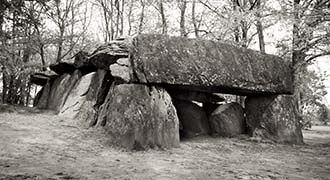
(USA TODAY) Western Europe's massive prehistoric tombs were built in a burst of activity over a few centuries around 4000 BC, suggests dating evidence, rather than continuously throughout the Stone Age. In the current European Journal of Archaeology, archaeologist Chris Scarre of the United Kingdom's Durham University, looks at the latest dating of "megalithic" prehistoric tombs stretching from Sweden to Spain. The mound-shaped burial sites are better known as "barrows" in Great Britain, or "passage tombs" for their intersecting halls of corbel stones. "It trivializes the tombs to call it a fad, but building such structures seems to have become a fashion where great numbers were built and then there was a cessation for centuries," Scarre says, in an interview. Improved dating of materials such as birch bark, bone and stone left in the tombs now reveals the clustered construction times of the mounds, he says. Rather than a single "megalithic" culture stretching across Europe, the outburst of mound tombs likely represents an idea reaching local cultures, he suggests, which then "stopped and started" across the centuries. "One big implication is the realization that the people buried in this fashion represent only a small fraction of the people who were alive then," Scarre says. "Until the Roman era, thoughtful burial of the dead may have been a rare thing in this part of Europe."


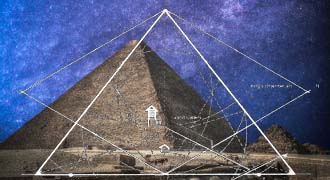
Robot to expose hidden secrets of pyramid
(TechNewsDaily) Following in the footsteps of Howard Carter and Abbot and Costello, a specialized robot will penetrate deeper into the Great Pyramid of Giza than ever before. The robot, part of a years long exploration called the Djedi Project, will explore a shaft inaccessible to a previous robot, unlocking a room that has remain sealed for 4,500 years. The robot explorer, built by researchers at the Leeds University, England, in collaboration with French aviation company Dessault and British robotics company Scoutek, will incorporate a small fiber optic camera for looking around corners, an ultrasonic probe for testing the quality of the rock and a releasable mini-robot that can fit through spaces as small as 0.7 inches in diameter. Additionally, the robot uses special nylon and carbon fiber wheels that won't deface the pyramid's sensitive rock. "All the robots were designed from scratch to do as little damage to the shafts as possible," Shaun Whitehead, Systems engineer and mission manager, told TechNewsDaily. "The previous robots both used tracks that scrubbed away at the floor and ceiling as they moved. We use soft brace pads to grip the walls, like an inchworm or the technique that rock climbers use for ascending 'chimneys.' The wheels don't need to grip, they need to slip as much as possible.'"
Whitehead designed the robot so that the team could easily swap out different components, depending on what they find down the shaft. To create the different components, Whitehead and his team used 3-D software provided by Dessault, and then "printed" out the parts on a 3-D fabricator at Leeds University.
The robot will travel down a shaft located in the tomb of the Queen. Unlike the King's tomb, where shafts lead to the outside of the Great Pyramid so his soul could escape into the afterlife, the shafts leading from the Queen's tomb borrow deeper into the pyramid. This is the third time a robot has tried to find the end of the Queen's tomb shaft. The first expedition found that a giant stone door blocked the tunnel, and the second robot discovered another door behind that one. With it's microbot and drill, the Leeds University researchers designed this new robot specifically to breach those obstacles.


Prehistoric Cave Paintings Discovered in Dominican Republic
(Herald tribune) A Dominican man discovered in the northern town of Monteclaro a cave with petroglyphs and other examples of prehistoric cave art, the daily Listin Diario said Tuesday. The discovery was made by area resident Raul Fernandez.
The cavern has 61 petroglyphs and two bas-relief sculptures, the newspaper learned from Spanish archaeologist Adolfo Lopez, who is in charge of researching the area and believes that the petroglyphs and sculptures could be 5,000 years old. Lopez, a specialist in cave art at Madrid’s Universidad Complutense, said that one of the Monteclaro sculptures is among the three most important ever found of pre-Columbian cave art, due to its particular shape and because such works are so rarely found, the daily said. “This sculpture is the last bas-relief of quality to be found in the Antilles. It portrays a figure sitting in a fetal position, which gives the idea that it is dedicated to fertility,” he said.
Lopez christened the cave with the name of “Raul de Monteclaro” in honor of its discoverer and the place where it is located. The scientist said that the cave could “perfectly well” be declared a World Heritage Site by the U.N. Educational, Scientific and Cultural Organization. Lopez said he hopes that some scientific institution will work in the area in order to discover its cultural values and its antiquity.

BOOKS

DVDs

SPECIAL OFFERS

FINE ART
PRINTS

RESONANCE
CARDS

LECTURES